Showing posts with label music. Show all posts
Showing posts with label music. Show all posts
Monday, February 28, 2022
The countdown is over
I needed to let you know that, due to a bunch of personal issues (most of them job-related, some related to finances, some even church-related), I've decided to stop holding the Ragtime to Riches Festival.
The continuing pandemic sure hasn't helped, as it wiped out what would've been the 2020 and 2021 R to R events.
Still...I'm thankful for everyone who attended the festival since its 2005 inception, and I'm thankful for every performer who did the festival.
Haven't dropped music for good, because I'm still going to the Pink Poodle Steakhouse in Crescent, IA to perform on the last Sunday of the month. (Hope to see you there!)

Monday, January 31, 2022
He helped make theater organ fun!
He passed away at age eighty on 12-30-2021...and he was the very first person I saw play a theater pipe organ in person. His name was Jack Moelmann.
In November 1984, he did a concert at Nebraska's Bellevue Little Theater, a playhouse that, at the time, had a two-manual, five-rank Wurlitzer theater organ. After the concert, I was invited to what turned out to be an organizational meeting of the River City Theatre Organ Society.
I've been a member of RCTOS ever since.
And Jack was one of the biggest reasons I joined the club.
His name was Jack Moelmann.
In November 1984, he did a concert at Nebraska's Bellevue Little Theater, a playhouse that, at the time, had a two-manual, five-rank Wurlitzer theater organ. After the concert, I was invited to what turned out to be an organizational meeting of the River City Theatre Organ Society.
I've been a member of RCTOS ever since.
And Jack was one of the biggest reasons I joined the club. At the time I met Jack, he was an Air Force colonel who was stationed at Bellevue's Offutt Air Force Base. He'd been in the Air Force since 1965, the year he received his Bachelor of Science degree from Bradley University.
 Chicago-born Jack got started in music in 1949, the year he turned eight years old (he not only took to the piano, he also sang in the church choir).
He was hooked for the rest of his life, thanks to the many gigs he played in high school and college.
Theater organ fans around here were very fortunate that Jack lived here in the Omaha/Council Bluffs/Bellevue area during 1984-85, a time when RCTOS was in its infancy. This highly-accomplished (both in the Air Force and in the world's concert halls and movie palaces) man helped make those early meetings fun, due to his vast repertoire AND his trademark humor.
Chicago-born Jack got started in music in 1949, the year he turned eight years old (he not only took to the piano, he also sang in the church choir).
He was hooked for the rest of his life, thanks to the many gigs he played in high school and college.
Theater organ fans around here were very fortunate that Jack lived here in the Omaha/Council Bluffs/Bellevue area during 1984-85, a time when RCTOS was in its infancy. This highly-accomplished (both in the Air Force and in the world's concert halls and movie palaces) man helped make those early meetings fun, due to his vast repertoire AND his trademark humor. Jack joined the American Theatre Organ Society in 1967; in 1983, he launched a 23-year period where he served on the ATOS board of directors in one capacity or another. From 1985 to 1988, he ran ATOS...then became its secretary in 1993, keeping that gig until 2006.
Two years before becoming ATOS secretary, Jack retired from the US Armed Forces. All the time he was in the USAF, Jack earned hardware such as the Air Force Commendation Medal, the Air Force Meritorious Service Medal, the Defense Meritorious Service Medal, and the Legion of Merit.
Jack eventually left the Omaha Metro and moved to the St. Louis area...where he turned everything up a bunch of notches. He became a lifetime member of ATOS in 1994, an inductee into the organization's Hall of Fame in 2008, and ATOS Organist of the Year in 2018.
Jack joined the American Theatre Organ Society in 1967; in 1983, he launched a 23-year period where he served on the ATOS board of directors in one capacity or another. From 1985 to 1988, he ran ATOS...then became its secretary in 1993, keeping that gig until 2006.
Two years before becoming ATOS secretary, Jack retired from the US Armed Forces. All the time he was in the USAF, Jack earned hardware such as the Air Force Commendation Medal, the Air Force Meritorious Service Medal, the Defense Meritorious Service Medal, and the Legion of Merit.
Jack eventually left the Omaha Metro and moved to the St. Louis area...where he turned everything up a bunch of notches. He became a lifetime member of ATOS in 1994, an inductee into the organization's Hall of Fame in 2008, and ATOS Organist of the Year in 2018. The crowning touch (well, I like to think so!) came in August 2008...when he headlined at New York City's Radio City Music Hall. (If I can find that on YouTube, well...)
 Jack, I'm glad to have been a part of your life.
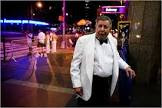 I'm glad you were a part of mine.
Wednesday, June 17, 2020
Lookbook #2- "Rivertown Rock!"
I've been wanting to put up this lookbook for some time...and I would've kicked the idea to the curb if it weren't for the way you responded to the "Really Old School" lookbook and its video counterpart.
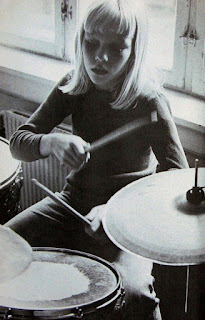
In 1992, I wrote a screenplay called "Rivertown Rock!" In it, I wanted to take a look at how music's British Invasion affected teenagers here in America's Midwest in general...and one family in particular. Always wanted to take a look at it through a screenplay of mine.
I wouldn't have started a record collection if the invasion weren't a catalyst...and maybe you began collecting 45s and albums back then, too, because of groups like the Beatles and the Dave Clark Five and the Rolling Stones.
Well, after getting feedback through Stage 32, I decided to revise that script of mine (same for "Really Old School" and two others)...and now, through sources like Network ISA, I'm looking for a producer who'd like to film it. (I've already submitted five screenplays of mine through ISA...and got yet to hear from any producers. That's okay...that's the way the system is.)
Here's the "Rivertown Rock!" logline:
It's Sunday, 2-9-1964...when the Beatles' appearance on The Ed Sullivan Show inspires a Sioux City, IA teenager to start her own rock group and show that girls can play the music, too.




 I'm Jim Boston...thanks so much for reading this blog!
In 1992, I wrote a screenplay called "Rivertown Rock!" In it, I wanted to take a look at how music's British Invasion affected teenagers here in America's Midwest in general...and one family in particular. Always wanted to take a look at it through a screenplay of mine.
I wouldn't have started a record collection if the invasion weren't a catalyst...and maybe you began collecting 45s and albums back then, too, because of groups like the Beatles and the Dave Clark Five and the Rolling Stones.
Well, after getting feedback through Stage 32, I decided to revise that script of mine (same for "Really Old School" and two others)...and now, through sources like Network ISA, I'm looking for a producer who'd like to film it. (I've already submitted five screenplays of mine through ISA...and got yet to hear from any producers. That's okay...that's the way the system is.)
Here's the "Rivertown Rock!" logline:
It's Sunday, 2-9-1964...when the Beatles' appearance on The Ed Sullivan Show inspires a Sioux City, IA teenager to start her own rock group and show that girls can play the music, too.


Saturday, February 29, 2020
They kept writing 'em like that anymore
My childhood fell between the middle 1950s and early 1970s...and for television fans here in the United States, that meant that variety shows were all over the dial. If you watched, for example, The Ed Sullivan Show, you'd more often than not get to see your favorite rock/R&B act...about a half hour after Ed introduced one of those smooth pop crooners on the show.
In fact, my first eight years of life (1955-1963) were a period when America's music industry was trying to figure itself out. In early April 1957, for instance, Perry Como's "'Round and 'Round" was Billboard's Number One pop hit...only to be displaced a week later by "All Shook Up," by Elvis Presley.
And "All Shook Up" rode high for nine weeks...until knocked off the top spot by "Love Letters in the Sand," by Pat Boone, a man whose records, by then, had one foot in the Presley ethos and the other in the Como system.
Industry leaders, as a group, loved the old Tin Pan Alley styles...but knew the newer styles were where the money was.
Even so, some of the biggest hits of the late 1950s through, really, the middle 1970s, owed something to the way pop music sounded in the 1890s-1920s period...when ragtime, followed by jazz, caught America's attention.
With that in mind, here's a list of ragtime/honky tonk-influenced rock/R&B/pop songs recorded from 1956 to 1974:

1. "The Green Door," Jim Lowe (Dot 14586; r*5, *1, 1956)/2. "When I See You," Fats Domino (Imperial 5454; r*14, *29, 1957)/3. "Sugartime," McGuire Sisters (Coral 61924; *1, 1958)/4. "The Stripper," David Rose (MGM 13064; r*12, *1, 1962)/5. "Alley Cat," Bent Fabric (Atco 6226; *7, 1962)/6. "Those Lazy-Hazy-Crazy Days of Summer," Nat King Cole (Capitol 4965; r*11, *6, 1963)/7. "Washington Square," Village Stompers (Epic 9617; r*22, *2, 1963)/8. "(Down at) Papa Joe's," Dixiebelles (Sound Stage 7 2507; *9, 1963)/9. "Southtown, USA," Dixiebelles (Sound Stage 7 2517; *15, 1964)/10. "Java," Al Hirt (RCA Victor 8280; *4, 1964)/11. "Daydream," Lovin' Spoonful (Kama Sutra 208; *2, 1966)/12. "Spanish Flea," Herb Alpert and the Tijuana Brass (A&M 792; *27, 1966)/13. "I Love Onions," Susan Christie (Columbia 43595; *63, 1966).

14. "Winchester Cathedral," New Vaudeville Band (Fontana 1562; *1, 1966)/15. "Lady Godiva," Peter and Gordon (Capitol 5740; *6, 1966)/16. "Words of Love," Mamas and the Papas (Dunhill 4057; *5, 1967)/17. "Hello Hello," Sopwith "Camel" (Kama Sutra 217; *26, 1967)/18. "I Was Kaiser Bill's Batman," Whistling Jack Smith (Deram 85005; *20, 1967)/19. "Like an Old-Time Movie," Scott McKenzie (Ode 105; *24, 1967)/20. "Cab Driver," Mills Brothers (Dot 17041; *23, 1968)/21. "The Ballad of Bonnie and Clyde," Georgie Fame (Epic 10283; *7, 1968)/22. "Cinderella Rockefella," Esther and Abi Ofarim (Philips 40526; *68, 1968)/23. "Indian Lake," Cowsills (MGM 13944; *10, 1968)/24. "Those Were the Days," Mary Hopkin (Apple 1801; *2, 1968)/25. "Goodbye," Mary Hopkin (Apple 1806; *13, 1969)/26. "Abergavenny," Shannon (AKA Marty Wilde) (Heritage 814; *47, 1969).

27. "Is That All There Is," Peggy Lee (Capitol 2602; *11, 1969)/28. "Rag Mama Rag," Band (Capitol 2705; *57, 1970)/29. "Gimme Dat Ding," Pipkins (Capitol 2819; *9, 1970)/30. "Mississippi," John Phillips (ABC Dunhill 4236; *32, 1970)/31. "In the Summertime," Mungo Jerry (Janus 125; *3, 1970)/32. "Rubber Duckie," Jim Henson's Ernie (Columbia 45207; *16, 1970)/33. "Honky Cat," Elton John (Uni 55343; *8, 1972)/34. "Tie a Yellow Ribbon 'Round the Ole Oak Tree," Tony Orlando and Dawn (Bell 45,318; *1, 1973)/35. "Say, Has Anybody Seen My Sweet Gypsy Rose," Tony Orlando and Dawn (Bell 45,374; *3, 1973)/36. "Who's in the Strawberry Patch with Sally," Tony Orlando and Dawn (Bell 45,424; *27, 1973)/37. "Last Time I Saw Him," Diana Ross (Motown 1278; r*15, *14, 1974)/38. "Nothing from Nothing," Billy Preston (A&M 1544; r*8, *1, 1974)/39. "Steppin' Out (Gonna Boogie Tonight)," Tony Orlando and Dawn (Bell 45,601; *7, 1974).
The chart positions were taken from Joel Whitburn's "Record Research," compiled from Billboard's Pop chart, unless indicated otherwise; r*= the record's position on Billboard's R&B chart.
See you next time, and thanks for reading "Boston's Blog!"
In fact, my first eight years of life (1955-1963) were a period when America's music industry was trying to figure itself out. In early April 1957, for instance, Perry Como's "'Round and 'Round" was Billboard's Number One pop hit...only to be displaced a week later by "All Shook Up," by Elvis Presley.
And "All Shook Up" rode high for nine weeks...until knocked off the top spot by "Love Letters in the Sand," by Pat Boone, a man whose records, by then, had one foot in the Presley ethos and the other in the Como system.
Industry leaders, as a group, loved the old Tin Pan Alley styles...but knew the newer styles were where the money was.
Even so, some of the biggest hits of the late 1950s through, really, the middle 1970s, owed something to the way pop music sounded in the 1890s-1920s period...when ragtime, followed by jazz, caught America's attention.
With that in mind, here's a list of ragtime/honky tonk-influenced rock/R&B/pop songs recorded from 1956 to 1974:

1. "The Green Door," Jim Lowe (Dot 14586; r*5, *1, 1956)/2. "When I See You," Fats Domino (Imperial 5454; r*14, *29, 1957)/3. "Sugartime," McGuire Sisters (Coral 61924; *1, 1958)/4. "The Stripper," David Rose (MGM 13064; r*12, *1, 1962)/5. "Alley Cat," Bent Fabric (Atco 6226; *7, 1962)/6. "Those Lazy-Hazy-Crazy Days of Summer," Nat King Cole (Capitol 4965; r*11, *6, 1963)/7. "Washington Square," Village Stompers (Epic 9617; r*22, *2, 1963)/8. "(Down at) Papa Joe's," Dixiebelles (Sound Stage 7 2507; *9, 1963)/9. "Southtown, USA," Dixiebelles (Sound Stage 7 2517; *15, 1964)/10. "Java," Al Hirt (RCA Victor 8280; *4, 1964)/11. "Daydream," Lovin' Spoonful (Kama Sutra 208; *2, 1966)/12. "Spanish Flea," Herb Alpert and the Tijuana Brass (A&M 792; *27, 1966)/13. "I Love Onions," Susan Christie (Columbia 43595; *63, 1966).

14. "Winchester Cathedral," New Vaudeville Band (Fontana 1562; *1, 1966)/15. "Lady Godiva," Peter and Gordon (Capitol 5740; *6, 1966)/16. "Words of Love," Mamas and the Papas (Dunhill 4057; *5, 1967)/17. "Hello Hello," Sopwith "Camel" (Kama Sutra 217; *26, 1967)/18. "I Was Kaiser Bill's Batman," Whistling Jack Smith (Deram 85005; *20, 1967)/19. "Like an Old-Time Movie," Scott McKenzie (Ode 105; *24, 1967)/20. "Cab Driver," Mills Brothers (Dot 17041; *23, 1968)/21. "The Ballad of Bonnie and Clyde," Georgie Fame (Epic 10283; *7, 1968)/22. "Cinderella Rockefella," Esther and Abi Ofarim (Philips 40526; *68, 1968)/23. "Indian Lake," Cowsills (MGM 13944; *10, 1968)/24. "Those Were the Days," Mary Hopkin (Apple 1801; *2, 1968)/25. "Goodbye," Mary Hopkin (Apple 1806; *13, 1969)/26. "Abergavenny," Shannon (AKA Marty Wilde) (Heritage 814; *47, 1969).

27. "Is That All There Is," Peggy Lee (Capitol 2602; *11, 1969)/28. "Rag Mama Rag," Band (Capitol 2705; *57, 1970)/29. "Gimme Dat Ding," Pipkins (Capitol 2819; *9, 1970)/30. "Mississippi," John Phillips (ABC Dunhill 4236; *32, 1970)/31. "In the Summertime," Mungo Jerry (Janus 125; *3, 1970)/32. "Rubber Duckie," Jim Henson's Ernie (Columbia 45207; *16, 1970)/33. "Honky Cat," Elton John (Uni 55343; *8, 1972)/34. "Tie a Yellow Ribbon 'Round the Ole Oak Tree," Tony Orlando and Dawn (Bell 45,318; *1, 1973)/35. "Say, Has Anybody Seen My Sweet Gypsy Rose," Tony Orlando and Dawn (Bell 45,374; *3, 1973)/36. "Who's in the Strawberry Patch with Sally," Tony Orlando and Dawn (Bell 45,424; *27, 1973)/37. "Last Time I Saw Him," Diana Ross (Motown 1278; r*15, *14, 1974)/38. "Nothing from Nothing," Billy Preston (A&M 1544; r*8, *1, 1974)/39. "Steppin' Out (Gonna Boogie Tonight)," Tony Orlando and Dawn (Bell 45,601; *7, 1974).
The chart positions were taken from Joel Whitburn's "Record Research," compiled from Billboard's Pop chart, unless indicated otherwise; r*= the record's position on Billboard's R&B chart.
See you next time, and thanks for reading "Boston's Blog!"
Sunday, August 18, 2019
Well, it was a Valliant effort (and then some)
Last year, when Rob Richards teamed up with the Fremont, NE barbershop chorus known as the Pathfinders to deliver the Rose Theater's annual River City Theatre Organ Society concert, I didn't get to blog about it.
Had to rush right off and go to a church function afterwards.
No such circumstances this time around; I just got back this afternoon from the 2019 RCTOS extravaganza at the Rose.
I enjoyed it...just as I enjoyed the 2018 offering (despite it running overtime and me having to worry about lateness to that church function I committed to).
Still...when this year's bill was announced, I had mixed feelings. (That's my tough luck.)
I was excited to find out Brett Valliant was going to play the Rose's three-manual, 21-rank 1927 Wurlitzer pipe organ. (Saw one of his YouTube videos- the one where he played "Build Me Up, Buttercup-" and got excited.)
And, in 2005, I saw pianist Robert Glaser perform his brand of jazz at Omaha's since-closed Grande Olde Players Theater, which, at the time, put on a monthly jam session for local jazz performers.
Since then, I've loved Robert's way with a tune...his flair for turning a familiar song on its ear (such as "Ticket to Ride").
Today, Robert brought his Sing Sing Swing Orchestra to the venue at 20th and Farnam. Like Brett, Robert and his seven fellow instrumentalists in Sing Sing Swing play up a storm. And the band's featured vocalist, Julie Baker, sings up a storm.
Julie was the first female performer to be part of a Concert at the Rose since...2011, when another Nebraska big band, the sixteen-member Swingtones, shared the bill with Ballet Nebraska and organ great Dave Wickerham. (At that time, pianist Jennifer Novak-Haar and saxophonists Deb Lund and Sarah Stratton were in the Swingtones.)
Well, if you dig into "Boston's Blog's" archives, you'll find a post built around Lady Gaga's 2016 observation that the music business is a...well, you know, a boys' club. Not just in rock, R&B, pop, and country, either.
And that's why I had mixed feelings (flinch).
So...I bit my tongue this afternoon.
And opened up my ears.
And heard Brett wow the audience with tunes like "Vanessa," "Tango Tedesco," the "South Pacific" gem "Bali Hai," "Atlanta, GA," Pietro Deiro's "Pietro's Return," Disney mainstay "Go the Distance," "Maple Leaf Rag," "Over the Rainbow," "Little White Lies," and "You Raise Me Up..." to say nothing of a medley of selections from a Gioachino Rossini opera, 1817's "La Gazza Ladra," or "The Thieving Magpie."
Almost a century after "La Gazza Ladra" debuted, theater organs started popping up, and the first people to play them in public often took operas and other classical works and adapted them for those Mighty Wurlitzers and competing brands. (They weren't initially called "unit orchestras" for nothing...and Brett showed that today.)
After a fifteen-minute intermission, the man from Wichita, KS came back to fire up "Wake Up and Live."
He then turned the show over to Robert and Co.
Sing Sing Swing jumped out of the gate with "In the Mood" before Julie jumped up to sing 1964's "L-O-V-E," Nat King Cole's next-to-last chart single during his lifetime.
"One O'Clock Jump" followed before Julie grabbed the mike back from Robert to sing "That Old Black Magic." The two of 'em teamed up to sing "Chattanooga Choo Choo," and then it was all instrumental after that, with the orchestra teaming up with Brett to do "Sing, Sing, Sing" and an encore of "In the Mood."
Well...what can I say, after they had me moving in my seat to the music?
How about...encore?
Had to rush right off and go to a church function afterwards.
No such circumstances this time around; I just got back this afternoon from the 2019 RCTOS extravaganza at the Rose.
I enjoyed it...just as I enjoyed the 2018 offering (despite it running overtime and me having to worry about lateness to that church function I committed to).
Still...when this year's bill was announced, I had mixed feelings. (That's my tough luck.)
I was excited to find out Brett Valliant was going to play the Rose's three-manual, 21-rank 1927 Wurlitzer pipe organ. (Saw one of his YouTube videos- the one where he played "Build Me Up, Buttercup-" and got excited.)
And, in 2005, I saw pianist Robert Glaser perform his brand of jazz at Omaha's since-closed Grande Olde Players Theater, which, at the time, put on a monthly jam session for local jazz performers.
Since then, I've loved Robert's way with a tune...his flair for turning a familiar song on its ear (such as "Ticket to Ride").
Today, Robert brought his Sing Sing Swing Orchestra to the venue at 20th and Farnam. Like Brett, Robert and his seven fellow instrumentalists in Sing Sing Swing play up a storm. And the band's featured vocalist, Julie Baker, sings up a storm.
Julie was the first female performer to be part of a Concert at the Rose since...2011, when another Nebraska big band, the sixteen-member Swingtones, shared the bill with Ballet Nebraska and organ great Dave Wickerham. (At that time, pianist Jennifer Novak-Haar and saxophonists Deb Lund and Sarah Stratton were in the Swingtones.)
Well, if you dig into "Boston's Blog's" archives, you'll find a post built around Lady Gaga's 2016 observation that the music business is a...well, you know, a boys' club. Not just in rock, R&B, pop, and country, either.
And that's why I had mixed feelings (flinch).
So...I bit my tongue this afternoon.
And opened up my ears.
And heard Brett wow the audience with tunes like "Vanessa," "Tango Tedesco," the "South Pacific" gem "Bali Hai," "Atlanta, GA," Pietro Deiro's "Pietro's Return," Disney mainstay "Go the Distance," "Maple Leaf Rag," "Over the Rainbow," "Little White Lies," and "You Raise Me Up..." to say nothing of a medley of selections from a Gioachino Rossini opera, 1817's "La Gazza Ladra," or "The Thieving Magpie."
Almost a century after "La Gazza Ladra" debuted, theater organs started popping up, and the first people to play them in public often took operas and other classical works and adapted them for those Mighty Wurlitzers and competing brands. (They weren't initially called "unit orchestras" for nothing...and Brett showed that today.)
After a fifteen-minute intermission, the man from Wichita, KS came back to fire up "Wake Up and Live."
He then turned the show over to Robert and Co.
Sing Sing Swing jumped out of the gate with "In the Mood" before Julie jumped up to sing 1964's "L-O-V-E," Nat King Cole's next-to-last chart single during his lifetime.
"One O'Clock Jump" followed before Julie grabbed the mike back from Robert to sing "That Old Black Magic." The two of 'em teamed up to sing "Chattanooga Choo Choo," and then it was all instrumental after that, with the orchestra teaming up with Brett to do "Sing, Sing, Sing" and an encore of "In the Mood."
Well...what can I say, after they had me moving in my seat to the music?
How about...encore?
Wednesday, July 31, 2019
A tale of two ragtime festivals (Part 2)
Just going on how the Saturday session of this year's Ragtime to Riches Festival went, I had high hopes about the Sunday leg- the 7-14-2019 turn at Omaha's First Central Congregational United Church of Christ.
In a nutshell, we didn't get the kind of crowd that assembled at the Pink Poodle Steakhouse the day before.
But all four of those who paid to come to see the First Central leg of R to R 2019 still had fun.
At 2:00 PM (Central time), I was supposed to give a workshop.
I gave it, all right...but it wasn't the one I hoped to conduct.
Ever since last year, I've been wanting to showcase some of the work of four ragtime composers: Sadie Koninsky (1879-1952), Charlotte Blake (1885-1979), Julia Niebergall (1886-1968), and May Aufderheide (1888-1972).
I brought notes with me.
Yours truly forgot to bring sheet music.
So...I went the autobiographical route instead. (Next year, I want to build my concert around works like Sadie's "Eli Green's Cakewalk," Julia's "Hoosier Rag," May's "Dusty," and Charlotte's "That Poker Rag." And leave the workshop to another performer.)
Speaking of concert...Faye Ballard was the first to give one at this year's R to R.
Hers was a workshop in itself; the Champaign, IL native started her concert with favorites "The Entertainer," "Puttin' on the Ritz," "Sailin' Away on the Henry Clay," and "It Had to Be You."
The former University of Illinois-Champaign-Urbana office manager put her tribute to ragdom's Big Three smack dab in the middle: Scott Joplin's "Pineapple Rag," James Scott's "Frog Legs Rag," and Joseph Lamb's "Cleopatra Rag."
Faye went ahead and did one of May's followups to "Dusty" ("The Thriller") and followed it up with Adaline Shepherd's "Pickles and Peppers." "Raggity Rag" and "12th Street Rag" closed Faye's sixth R to R concert out.
Faye's mom, Erma, gave me the inspiration for my own concert.
Last year, Erma wanted to hear "Angry," a 1925 hit for a singer-pianist named Art Gillham, from me. I didn't have the sheet music with me at the time.
Fixed that here in 2019.
Matter of fact, my version of "Angry" led off a concert consisting of tunes whose titles have just one word apiece: Fellow 1925 hits "Cecilia" and "Collegiate," two compositions from 1927 ("Chloe" and a tune that somebody should've had a hit record with, "Beautiful"), 1920's "Margie," and two rags- Nellie M. Stokes' 1906 "Snowball" and another piece Scott J. came up with in 1902, "Cleopha."
I felt better about my concert than my workshop, I'll tell you that. I'm glad the concert worked out.
Marty Mincer accompanying Buster Keaton's 1920 short, "One Week," worked out great.

We were hoping Erma and Faye would come back for the 7:00 PM showing of "One Week," and Marty vamped for a while so that the Two Ballards could see the film in its entirety.
Oh, well...
But the audience enjoyed "One Week..." as well as Marty's handling of the music.

The apple farmer from Hamburg, IA had time left in his set to fire off his version of "The Entertainer" before he took R to R 15.0 out in style with "The Stars and Stripes Forever."
Well...now it's back to the drawing board to get the word out about Ragtime to Riches 2020.
Hope you can make it!
In a nutshell, we didn't get the kind of crowd that assembled at the Pink Poodle Steakhouse the day before.
But all four of those who paid to come to see the First Central leg of R to R 2019 still had fun.
At 2:00 PM (Central time), I was supposed to give a workshop.
I gave it, all right...but it wasn't the one I hoped to conduct.
Ever since last year, I've been wanting to showcase some of the work of four ragtime composers: Sadie Koninsky (1879-1952), Charlotte Blake (1885-1979), Julia Niebergall (1886-1968), and May Aufderheide (1888-1972).
I brought notes with me.
Yours truly forgot to bring sheet music.
So...I went the autobiographical route instead. (Next year, I want to build my concert around works like Sadie's "Eli Green's Cakewalk," Julia's "Hoosier Rag," May's "Dusty," and Charlotte's "That Poker Rag." And leave the workshop to another performer.)
Speaking of concert...Faye Ballard was the first to give one at this year's R to R.
Hers was a workshop in itself; the Champaign, IL native started her concert with favorites "The Entertainer," "Puttin' on the Ritz," "Sailin' Away on the Henry Clay," and "It Had to Be You."
The former University of Illinois-Champaign-Urbana office manager put her tribute to ragdom's Big Three smack dab in the middle: Scott Joplin's "Pineapple Rag," James Scott's "Frog Legs Rag," and Joseph Lamb's "Cleopatra Rag."
Faye went ahead and did one of May's followups to "Dusty" ("The Thriller") and followed it up with Adaline Shepherd's "Pickles and Peppers." "Raggity Rag" and "12th Street Rag" closed Faye's sixth R to R concert out.
Faye's mom, Erma, gave me the inspiration for my own concert.
Last year, Erma wanted to hear "Angry," a 1925 hit for a singer-pianist named Art Gillham, from me. I didn't have the sheet music with me at the time.
Fixed that here in 2019.
Matter of fact, my version of "Angry" led off a concert consisting of tunes whose titles have just one word apiece: Fellow 1925 hits "Cecilia" and "Collegiate," two compositions from 1927 ("Chloe" and a tune that somebody should've had a hit record with, "Beautiful"), 1920's "Margie," and two rags- Nellie M. Stokes' 1906 "Snowball" and another piece Scott J. came up with in 1902, "Cleopha."
I felt better about my concert than my workshop, I'll tell you that. I'm glad the concert worked out.
Marty Mincer accompanying Buster Keaton's 1920 short, "One Week," worked out great.

We were hoping Erma and Faye would come back for the 7:00 PM showing of "One Week," and Marty vamped for a while so that the Two Ballards could see the film in its entirety.
Oh, well...
But the audience enjoyed "One Week..." as well as Marty's handling of the music.

The apple farmer from Hamburg, IA had time left in his set to fire off his version of "The Entertainer" before he took R to R 15.0 out in style with "The Stars and Stripes Forever."
Well...now it's back to the drawing board to get the word out about Ragtime to Riches 2020.
Hope you can make it!
Sunday, July 15, 2018
Now that's more like it!
For a while, the 2018 Ragtime to Riches Festival looked as if it was going to be a bust.
Only six people showed up to each of the last two early-July old-time piano celebrations here in the Omaha/Council Bluffs/Bellevue area.
Fifty chairs were set up for spectators in Memorial Hall at the Big O's First Central Congregational United Church of Christ. The stage was set up with the greatest of care.
The doors to Memorial Hall at Omaha's oldest currently-practicing Protestant church were opened at 1:00 PM (Central time) on 7-8-2018.
Nobody came.
About ten minutes into the festival's open-piano session, I went over to the church's turn-of-the-20th-Century Anderson & Newton upright to go over the tunes I wanted to do as part of the event's workshop: "Four Ragtime Composers You Might Not Have Known About."
Well, 2:00 PM came...the very time the workshop was to begin.
Still, nobody came.
2:10 PM came and went. So did 2:20 PM.
And yet...nobody came.
Not even the two featured performers I was scheduled to play alongside.
Finally, at 2:31 PM, one of my fellow members of another local church (St. Paul United Methodist) walked inside First Central's Memorial Hall.
Marc May and I shot the breeze for a while as he and I wondered if this was going to be it...despite all the work to get the word out about the fourteenth annual Omaha ragfest.
One thing was for sure: The workshop had to get canceled.
Then...BOOM!
Between 2:45 PM and 3:10 PM, twelve people came inside...including featured performers Faye Ballard and Diana Stein.
At 3:05 PM (five minutes later than scheduled), I went up to bat first with R to R 2018's initial concert.
This time, instead of using songs whose titles include the names of states of the US (last year's personal R to R fare), I went for some tunes that were in the Number One spot on the various US pop music charts on Independence Day. And the first number in the concert was a ditty from 1892, "Throw Him Down, McCloskey," written by J.W. Kelly and recorded by a man named Charles Marsh. (Charles was one of music's first one-hit wonders: His wax cylinder made it up to the Number One spot on 6-18-1892 and stayed there for three weeks.)
My next number turned out to be Tin Pan Alley's first blockbuster hit: "After the Ball," the Charles K. Harris tune that sold six million pieces of sheet music once it hit the streets in 1892...and became a smash recording the next year when George J. Gaskin put his lips to it (and made it Number One for ten weeks, beginning on 4-29-1893).
Those were the only tunes where I used sheet music.
The remaining eight songs in my set were all done from memory..."Golden Slippers," "Sweet Rosie O'Grady," "Hello, Ma Baby," "A Bird in a Gilded Cage," "The Preacher and the Bear," "Sweet Georgia Brown," and two from outside the 1890-1929 period: "Sentimental Journey" and "I Can't Stop Loving You."
Well, the crowd liked it. (Whew!)
Had to cut my set short so that Diana (a Memphis, TN native who, six weeks earlier, was one of the first finalists in the newly-created Senior Division competition at Mississippi's World Championship Old-Time Piano Playing Contest and Festival) could make her Ragtime to Riches debut on time...4:15 PM.
Actually, Diana launched her set at 4:10 PM...when she took to the church's 2015 Yamaha grand piano.
It was great not only to see her again (first time since the 2012 OTPP Contest), but also to hear her again. The audience really enjoyed Diana's robust, powerful blend of rags, stride, boogie woogie, and blues...and she kicked it all off with two Scott Joplin numbers: "Magnetic Rag" and "Pineapple Rag." (Diana added two more of Scott's compositions later on in her thirteen-tune set: "Solace" and the one that kicked syncopation into high gear, "Maple Leaf Rag.")
Diana's versions of "Nickel in the Slot," "Singin' in the Rain," "Monkey Strut," and "Memories of You" stood out, too, as did her version of James Scott's "Climax Rag."
The community-college instructor closed out her concert with two Fats Waller tunes: The famous "Ain't Misbehavin'" and the not-as-well-known "Viper Strut."
Diana, what a debut you put on! You tore that Memorial Hall down!
At 7:00 PM, OTPP's contest coordinator kicked off this year's R to R anchor leg by firing off two medleys- one consisting of the theme songs of America's five Armed Forces branches, the other medley devoted to George M. Cohan's music.
Staying at the Yamaha grand piano, Faye changed the music to "Puttin' on the Ritz."
She likened her set to a party...and what a party it was!
To substantiate that, the Champaign, IL native went back to the medley well to join "Beer Barrel Polka" with "Too Fat Polka." And Faye showed two of ragtime's Big Three composers some love by doing James' "Frog Legs Rag" and Joseph Lamb's "Cleopatra Rag." Plus, the former University of Illinois-Champaign-Urbana office manager put in old favorites like "It Had to Be You," "Mack the Knife," "Harlem Rag," and "Sailin' Away on the Henry Clay."
Faye's one of the first people to tell you that the Illinois-turned-Mississippi get-together is, at its core, a cutting contest. And as a case in point, she played her famous version of one of the rags Diana put in her own set: Luckey Roberts' "Pork and Beans."
After playing ten ditties, Faye turned it over to one of this year's C&F Junior Division finalists: Rich Bliesener, a thirteen-year-old who lives in and goes to school in Burlington, IA. (Rich's number was "Humpty Dumpty," a rag written in 1914 by Charley Straight...one of the coauthors of "Mockingbird Rag.")
Faye's fifteen-tune set ended with "Charleston Rag" and "12th Street Rag."
And then...the fun spilled over into the afterglow party, where Rich and Faye took to the two pianos.
In fact, Faye and Rich made this year's R to R afterglow the most successful one in the festival's history.
 What's more, the Great Plains Ragtime Society took in $90 in ticket sales...a 50% increase from 2017.
Those of you who came to R to R 14.0, well...all I can say is:
Thanks for picking this festival up off the floor...and thanks for bringing the FUN!
Only six people showed up to each of the last two early-July old-time piano celebrations here in the Omaha/Council Bluffs/Bellevue area.
Fifty chairs were set up for spectators in Memorial Hall at the Big O's First Central Congregational United Church of Christ. The stage was set up with the greatest of care.
The doors to Memorial Hall at Omaha's oldest currently-practicing Protestant church were opened at 1:00 PM (Central time) on 7-8-2018.
Nobody came.
About ten minutes into the festival's open-piano session, I went over to the church's turn-of-the-20th-Century Anderson & Newton upright to go over the tunes I wanted to do as part of the event's workshop: "Four Ragtime Composers You Might Not Have Known About."
Well, 2:00 PM came...the very time the workshop was to begin.
Still, nobody came.
2:10 PM came and went. So did 2:20 PM.
And yet...nobody came.
Not even the two featured performers I was scheduled to play alongside.
Finally, at 2:31 PM, one of my fellow members of another local church (St. Paul United Methodist) walked inside First Central's Memorial Hall.
Marc May and I shot the breeze for a while as he and I wondered if this was going to be it...despite all the work to get the word out about the fourteenth annual Omaha ragfest.
One thing was for sure: The workshop had to get canceled.
Then...BOOM!
Between 2:45 PM and 3:10 PM, twelve people came inside...including featured performers Faye Ballard and Diana Stein.
At 3:05 PM (five minutes later than scheduled), I went up to bat first with R to R 2018's initial concert.
This time, instead of using songs whose titles include the names of states of the US (last year's personal R to R fare), I went for some tunes that were in the Number One spot on the various US pop music charts on Independence Day. And the first number in the concert was a ditty from 1892, "Throw Him Down, McCloskey," written by J.W. Kelly and recorded by a man named Charles Marsh. (Charles was one of music's first one-hit wonders: His wax cylinder made it up to the Number One spot on 6-18-1892 and stayed there for three weeks.)
My next number turned out to be Tin Pan Alley's first blockbuster hit: "After the Ball," the Charles K. Harris tune that sold six million pieces of sheet music once it hit the streets in 1892...and became a smash recording the next year when George J. Gaskin put his lips to it (and made it Number One for ten weeks, beginning on 4-29-1893).
Those were the only tunes where I used sheet music.
The remaining eight songs in my set were all done from memory..."Golden Slippers," "Sweet Rosie O'Grady," "Hello, Ma Baby," "A Bird in a Gilded Cage," "The Preacher and the Bear," "Sweet Georgia Brown," and two from outside the 1890-1929 period: "Sentimental Journey" and "I Can't Stop Loving You."
Well, the crowd liked it. (Whew!)
Had to cut my set short so that Diana (a Memphis, TN native who, six weeks earlier, was one of the first finalists in the newly-created Senior Division competition at Mississippi's World Championship Old-Time Piano Playing Contest and Festival) could make her Ragtime to Riches debut on time...4:15 PM.
Actually, Diana launched her set at 4:10 PM...when she took to the church's 2015 Yamaha grand piano.
It was great not only to see her again (first time since the 2012 OTPP Contest), but also to hear her again. The audience really enjoyed Diana's robust, powerful blend of rags, stride, boogie woogie, and blues...and she kicked it all off with two Scott Joplin numbers: "Magnetic Rag" and "Pineapple Rag." (Diana added two more of Scott's compositions later on in her thirteen-tune set: "Solace" and the one that kicked syncopation into high gear, "Maple Leaf Rag.")
Diana's versions of "Nickel in the Slot," "Singin' in the Rain," "Monkey Strut," and "Memories of You" stood out, too, as did her version of James Scott's "Climax Rag."
The community-college instructor closed out her concert with two Fats Waller tunes: The famous "Ain't Misbehavin'" and the not-as-well-known "Viper Strut."
Diana, what a debut you put on! You tore that Memorial Hall down!
At 7:00 PM, OTPP's contest coordinator kicked off this year's R to R anchor leg by firing off two medleys- one consisting of the theme songs of America's five Armed Forces branches, the other medley devoted to George M. Cohan's music.
Staying at the Yamaha grand piano, Faye changed the music to "Puttin' on the Ritz."
She likened her set to a party...and what a party it was!
To substantiate that, the Champaign, IL native went back to the medley well to join "Beer Barrel Polka" with "Too Fat Polka." And Faye showed two of ragtime's Big Three composers some love by doing James' "Frog Legs Rag" and Joseph Lamb's "Cleopatra Rag." Plus, the former University of Illinois-Champaign-Urbana office manager put in old favorites like "It Had to Be You," "Mack the Knife," "Harlem Rag," and "Sailin' Away on the Henry Clay."
Faye's one of the first people to tell you that the Illinois-turned-Mississippi get-together is, at its core, a cutting contest. And as a case in point, she played her famous version of one of the rags Diana put in her own set: Luckey Roberts' "Pork and Beans."
After playing ten ditties, Faye turned it over to one of this year's C&F Junior Division finalists: Rich Bliesener, a thirteen-year-old who lives in and goes to school in Burlington, IA. (Rich's number was "Humpty Dumpty," a rag written in 1914 by Charley Straight...one of the coauthors of "Mockingbird Rag.")
Faye's fifteen-tune set ended with "Charleston Rag" and "12th Street Rag."
And then...the fun spilled over into the afterglow party, where Rich and Faye took to the two pianos.
In fact, Faye and Rich made this year's R to R afterglow the most successful one in the festival's history.

Those of you who came to R to R 14.0, well...all I can say is:
Thanks for picking this festival up off the floor...and thanks for bringing the FUN!
Saturday, September 30, 2017
America's greatest living composers...today
77 years ago this past Sunday, a special concert took place at the California Coliseum in San Francisco, CA.
On Tuesday, 9-24-1940, America's top living composers and lyricists gathered together and entertained the audience in the City by the Bay.
*Albert Von Tilzer did his "Take Me Out to the Ball Game."
*L. Wolfe Gilbert performed his anthem, "Waiting for the Robert E. Lee."
*Jerome Kern played his own "Smoke Gets in Your Eyes" before guiding Tony Martin for "All the Things You Are."
*Carrie Jacobs Bond went to the piano to accompany singer Alan Linquist as he warbled her "A Perfect Day."
*George M. Cohan offered his "Over There," among other tunes in a medley of his big ones.
*And Irving Berlin wrapped up the festivities with his "God Bless America."
The whole thing was actually a two-part event put on by the American Society of Composers, Authors, and Publishers (that's right, good ol' ASCAP). The event's title: "Cavalcade of Music: Those Who Make America's Music."
In what was billed as "the most notable assemblage of artists and composers ever gathered on one stage," thousands at the California Coliseum heard and saw over forty ASCAP members do their thing.
During the first half of the event (the afternoon session), the crowd heard American classical music. The evening session- what turned out to be the payoff half- went to this country's contributions to popular music.
That night, Berlin, Bond, Cohan, Gilbert, Kern, and Von Tilzer were joined by the likes of Harold Arlen, Harry Armstrong, Shelton Brooks, Hoagy Carmichael, Walter Donaldson, W.C. Handy, Billy Hill, Joe Howard, Ralph Rainiger, Sigmund Romberg, and Leo Robin...to say nothing of the team of Bert Kalmar and Harry Ruby.
Back on 7-9-2017, toward the end of the Ragtime to Riches Festival workshop about Bond, the 9-24-1940 festivities got a mention...and the question eventually came up:
"If they were going to put on a concert like this today, with America's greatest living composers, who would show up?"
Well, first of all, HBO or MTV or Showtime would be most likely to televise the event. (The 1940 soiree wasn't on radio...and we're lucky to have a recording of the whole concert because ASCAP commissioned a San Fran firm, Photo and Sound, Inc., to put the entire shebang on twelve 16" two-sided discs, playable at 33-1/3 RPM at a time when consumers were eight years away from being able to buy records at that speed.)
Second, the producers would probably have to rent out New York City's Radio City Music Hall, Los Angeles' Dolby Theater, or Cleveland's Rock and Roll Hall of Fame to hold the event.
Third, you're darn right you'll be able to get on your computer or smartphone or device of some kind and stream the show live.
Of course, it'd be televised live and in prime time. (Bet you they'd need three hours.)
They'd need three hours- at least that long- for the following tunesmiths:
*Burt Bacharach
*Neil Diamond
*Bob Dylan
*The twosome of Bernard Edwards and Nile Rodgers
*Sheldon Harnick
*Another duo- James "Jimmy Jam" Harris and Terry Lewis
*Jerry Herman
*The team of Brian Holland, Lamont Dozier, and Eddie Holland
*Rupert Holmes
*Billy Joel
*John Kander
*Carole King
*Robert Lopez (of "Frozen" fame)
*The duo of Barry Mann and Cynthia Weil
*Alan Menken
*Lin-Manuel Miranda
*Willie Nelson
*Dolly Parton
*William "Smokey" Robinson
*Steven Schwartz
*Neil Sedaka
*Marc Shaiman (he did the music to Broadway's "Hairspray")
*Paul Simon
*Valerie Simpson
*Stephen Sondheim
*Barrett Strong (Norman Whitfield's old songwriting partner)
*Diane Warren
*Jim Webb
*Frank Wildhorn (helped bring "Victor/Victoria" to Broadway)
*John Williams
*Stevie Wonder
The bulk of this list was mined from the 2017 World Almanac and Book of Facts.
With that in mind, who would you add to this list? Which of these songwriters would you like to remove from the list?
What if you wanted to internationalize the list...and bring in living legends like Benny Andersson (of ABBA fame), Paul Anka, Bjork, Eric Clapton, Mick Jagger, Elton John, Andrew Lloyd Webber, Paul McCartney, Ringo Starr, Bernie Taupin, Keith Richards, Rod Temperton, and Bjorn Ulvaeus (also of ABBA), just to name a few?
Could a special featuring America's greatest currently-living composers even hit today's TV screens?
Let me know what you think.
I'm Jim Boston...thanks for reading this blog!
On Tuesday, 9-24-1940, America's top living composers and lyricists gathered together and entertained the audience in the City by the Bay.
*Albert Von Tilzer did his "Take Me Out to the Ball Game."
*L. Wolfe Gilbert performed his anthem, "Waiting for the Robert E. Lee."
*Jerome Kern played his own "Smoke Gets in Your Eyes" before guiding Tony Martin for "All the Things You Are."
*Carrie Jacobs Bond went to the piano to accompany singer Alan Linquist as he warbled her "A Perfect Day."
*George M. Cohan offered his "Over There," among other tunes in a medley of his big ones.
*And Irving Berlin wrapped up the festivities with his "God Bless America."
The whole thing was actually a two-part event put on by the American Society of Composers, Authors, and Publishers (that's right, good ol' ASCAP). The event's title: "Cavalcade of Music: Those Who Make America's Music."
In what was billed as "the most notable assemblage of artists and composers ever gathered on one stage," thousands at the California Coliseum heard and saw over forty ASCAP members do their thing.
During the first half of the event (the afternoon session), the crowd heard American classical music. The evening session- what turned out to be the payoff half- went to this country's contributions to popular music.
That night, Berlin, Bond, Cohan, Gilbert, Kern, and Von Tilzer were joined by the likes of Harold Arlen, Harry Armstrong, Shelton Brooks, Hoagy Carmichael, Walter Donaldson, W.C. Handy, Billy Hill, Joe Howard, Ralph Rainiger, Sigmund Romberg, and Leo Robin...to say nothing of the team of Bert Kalmar and Harry Ruby.
Back on 7-9-2017, toward the end of the Ragtime to Riches Festival workshop about Bond, the 9-24-1940 festivities got a mention...and the question eventually came up:
"If they were going to put on a concert like this today, with America's greatest living composers, who would show up?"
Well, first of all, HBO or MTV or Showtime would be most likely to televise the event. (The 1940 soiree wasn't on radio...and we're lucky to have a recording of the whole concert because ASCAP commissioned a San Fran firm, Photo and Sound, Inc., to put the entire shebang on twelve 16" two-sided discs, playable at 33-1/3 RPM at a time when consumers were eight years away from being able to buy records at that speed.)
Second, the producers would probably have to rent out New York City's Radio City Music Hall, Los Angeles' Dolby Theater, or Cleveland's Rock and Roll Hall of Fame to hold the event.
Third, you're darn right you'll be able to get on your computer or smartphone or device of some kind and stream the show live.
Of course, it'd be televised live and in prime time. (Bet you they'd need three hours.)
They'd need three hours- at least that long- for the following tunesmiths:
*Burt Bacharach
*Neil Diamond
*Bob Dylan
*The twosome of Bernard Edwards and Nile Rodgers
*Sheldon Harnick
*Another duo- James "Jimmy Jam" Harris and Terry Lewis
*Jerry Herman
*The team of Brian Holland, Lamont Dozier, and Eddie Holland
*Rupert Holmes
*Billy Joel
*John Kander
*Carole King
*Robert Lopez (of "Frozen" fame)
*The duo of Barry Mann and Cynthia Weil
*Alan Menken
*Lin-Manuel Miranda
*Willie Nelson
*Dolly Parton
*William "Smokey" Robinson
*Steven Schwartz
*Neil Sedaka
*Marc Shaiman (he did the music to Broadway's "Hairspray")
*Paul Simon
*Valerie Simpson
*Stephen Sondheim
*Barrett Strong (Norman Whitfield's old songwriting partner)
*Diane Warren
*Jim Webb
*Frank Wildhorn (helped bring "Victor/Victoria" to Broadway)
*John Williams
*Stevie Wonder
The bulk of this list was mined from the 2017 World Almanac and Book of Facts.
With that in mind, who would you add to this list? Which of these songwriters would you like to remove from the list?
What if you wanted to internationalize the list...and bring in living legends like Benny Andersson (of ABBA fame), Paul Anka, Bjork, Eric Clapton, Mick Jagger, Elton John, Andrew Lloyd Webber, Paul McCartney, Ringo Starr, Bernie Taupin, Keith Richards, Rod Temperton, and Bjorn Ulvaeus (also of ABBA), just to name a few?
Could a special featuring America's greatest currently-living composers even hit today's TV screens?
Let me know what you think.
I'm Jim Boston...thanks for reading this blog!
Sunday, August 20, 2017
David conquers Goliath...again!
Well, this afternoon, noted theater organist Dave Wickerham came back for another taste of the three-manual, 21-rank Mighty Wurlitzer pipe organ at Omaha's Rose Blumkin Performing Arts Center.
It was the second time in three years that the Californian-turned-Arizonan-turned-Michigander concertized for the Omaha-based River City Theatre Organ Society.
And just as he did in 2015, Dave hit it out of the park.
Except this time, it was a tape-measure home run.
Dave kicked off his 2017 show with a "Happy" medley, where he hitched "C'mon, Get Happy" to "I Want to Be Happy."
Once the medley became water under the bridge, Dave- now the co-manager/organist in residence at the Crystal Theater in Crystal Falls, MI- told the huge audience at the Rose Theater that he wanted to take the Omaha crowd through several musical themes.
With that in mind, Dave went back to what's now the only concert-ready theater pipe organ in the whole state of Nebraska and delivered Scott Joplin's "Original Rags," then followed it up with a medley from "Mary Poppins," the 1964 theatrical movie that put Julie Andrews on the map for good. (All she did was pick up an Oscar for playing the title role.)
Keep the word "movie" in mind as you keep reading this post.
Before attending today's concert, I thought "Colonel Bogey March" was written for the 1957 big-screen smash (and seven-Oscar winner) "The Bridge on the River Kwai."
It wasn't.
The tune goes all the way back to 1914, when a man named Kenneth J. Alford (1881-1945) came up with the march. (His real name was Frederick J. Ricketts.)
When Dave played "CBM" today, he really made the audience feel it.
Another theme Dave wanted to touch on was the Great American Songbook...and the first move in that direction was to fire up "I'm Beginning to See the Light" and "Take the 'A' Train," two tunes made famous by Duke Ellington (who cowrote "Light" while one of his most famous arrangers, Billy Strayhorn, penned "'A' Train").
Leonard Cohen's most familiar number, "Hallelujah," got into Dave's menu...and gave lie to the idea that songs written right here in the 21st Century can't work if played on a theater organ.
And then...the Encino Man paid tribute to John Williams (that's right, five-time Academy Award-winning John Williams).
After the ensuing medley (the longest medley in this afternoon's concert), it was intermission time.
Fifteen minutes or so later, Dave got back on the now 90-year-old organ to play three dance tunes from the 1920s...two of which were "Doin' the Raccoon" (a 1928 ditty written by Raymond Klages and J. Fred Coots) and the more familiar "Charleston."
Then the audience was treated to a "Pie Fight."
Actually, the film's title is "The Battle of the Century," and it came out in 1927- the very year the then one-year-old Paramount Theater (the Rose's original name) received the organ Dave triumphed on.
And all that's left of this Stan Laurel-Oliver Hardy romp are the opening credits and...well, the three-minute pie fight (the biggest one ever filmed up to that time).
In years past, RCTOS concerts paired a big-name theater organist with a local act.
This time, the Rose Theater audience became the local act...in the form of an audience singalong. And after cuing up the three-minute-and-forty-second movie, Dave accompanied the crowd in longtime singalong favorites like "Take Me Out to the Ball Game" and "Bicycle Built for Two."
Now it was back to the movies for Dave as he turned in a great version of the Oscar-winning "My Heart Will Go On," one of the many reasons the 1997 movie "Titanic" remains so memorable.
Time was running out on the performance, and Dave knew it...so he went on and knocked out two Cole Porter numbers, two by Irving Berlin, and two by George Gershwin in a "2-2-2" medley.
It's hard to stage a Rose Theater Mighty Wurlitzer get-together without a patriotic medley...and this year's edition passed the test, too. This year's patriotic tribute started with the theme songs from all five of America's Armed Forces branches (from "The Caissons Go Rolling Along" to a stirring, stirring version of "The Marines' Hymn"), went to "America (My Country, 'Tis of Thee)," and morphed into "America the Beautiful."
"God Bless America" and "You're a Grand Old Flag" would've made the cut, too...if they hadn't been part of the singalong.
We weren't going to let Dave get away to his next stop (Manchester, England) without an encore.
Result: Dave put an exclamation point on the end of his Rose romp by performing a classical piece. (Man, I wish I knew its title!)
If you like theater organ music and you've never heard Dave Wickerham, check his music out...whether it's in person, on YouTube, or some other way.
You'll come away happy, too.
It was the second time in three years that the Californian-turned-Arizonan-turned-Michigander concertized for the Omaha-based River City Theatre Organ Society.
And just as he did in 2015, Dave hit it out of the park.
Except this time, it was a tape-measure home run.
Dave kicked off his 2017 show with a "Happy" medley, where he hitched "C'mon, Get Happy" to "I Want to Be Happy."
Once the medley became water under the bridge, Dave- now the co-manager/organist in residence at the Crystal Theater in Crystal Falls, MI- told the huge audience at the Rose Theater that he wanted to take the Omaha crowd through several musical themes.
With that in mind, Dave went back to what's now the only concert-ready theater pipe organ in the whole state of Nebraska and delivered Scott Joplin's "Original Rags," then followed it up with a medley from "Mary Poppins," the 1964 theatrical movie that put Julie Andrews on the map for good. (All she did was pick up an Oscar for playing the title role.)
Keep the word "movie" in mind as you keep reading this post.
Before attending today's concert, I thought "Colonel Bogey March" was written for the 1957 big-screen smash (and seven-Oscar winner) "The Bridge on the River Kwai."
It wasn't.
The tune goes all the way back to 1914, when a man named Kenneth J. Alford (1881-1945) came up with the march. (His real name was Frederick J. Ricketts.)
When Dave played "CBM" today, he really made the audience feel it.
Another theme Dave wanted to touch on was the Great American Songbook...and the first move in that direction was to fire up "I'm Beginning to See the Light" and "Take the 'A' Train," two tunes made famous by Duke Ellington (who cowrote "Light" while one of his most famous arrangers, Billy Strayhorn, penned "'A' Train").
Leonard Cohen's most familiar number, "Hallelujah," got into Dave's menu...and gave lie to the idea that songs written right here in the 21st Century can't work if played on a theater organ.
And then...the Encino Man paid tribute to John Williams (that's right, five-time Academy Award-winning John Williams).
After the ensuing medley (the longest medley in this afternoon's concert), it was intermission time.
Fifteen minutes or so later, Dave got back on the now 90-year-old organ to play three dance tunes from the 1920s...two of which were "Doin' the Raccoon" (a 1928 ditty written by Raymond Klages and J. Fred Coots) and the more familiar "Charleston."
Then the audience was treated to a "Pie Fight."
Actually, the film's title is "The Battle of the Century," and it came out in 1927- the very year the then one-year-old Paramount Theater (the Rose's original name) received the organ Dave triumphed on.
And all that's left of this Stan Laurel-Oliver Hardy romp are the opening credits and...well, the three-minute pie fight (the biggest one ever filmed up to that time).
In years past, RCTOS concerts paired a big-name theater organist with a local act.
This time, the Rose Theater audience became the local act...in the form of an audience singalong. And after cuing up the three-minute-and-forty-second movie, Dave accompanied the crowd in longtime singalong favorites like "Take Me Out to the Ball Game" and "Bicycle Built for Two."
Now it was back to the movies for Dave as he turned in a great version of the Oscar-winning "My Heart Will Go On," one of the many reasons the 1997 movie "Titanic" remains so memorable.
Time was running out on the performance, and Dave knew it...so he went on and knocked out two Cole Porter numbers, two by Irving Berlin, and two by George Gershwin in a "2-2-2" medley.
It's hard to stage a Rose Theater Mighty Wurlitzer get-together without a patriotic medley...and this year's edition passed the test, too. This year's patriotic tribute started with the theme songs from all five of America's Armed Forces branches (from "The Caissons Go Rolling Along" to a stirring, stirring version of "The Marines' Hymn"), went to "America (My Country, 'Tis of Thee)," and morphed into "America the Beautiful."
"God Bless America" and "You're a Grand Old Flag" would've made the cut, too...if they hadn't been part of the singalong.
We weren't going to let Dave get away to his next stop (Manchester, England) without an encore.
Result: Dave put an exclamation point on the end of his Rose romp by performing a classical piece. (Man, I wish I knew its title!)
If you like theater organ music and you've never heard Dave Wickerham, check his music out...whether it's in person, on YouTube, or some other way.
You'll come away happy, too.
Sunday, April 17, 2016
What's Wrong with This Picture? How'd We Get Here?
Out of the 127 total artists on Billboard's Power 100 List for 2015, 15 of the acts were female. (Never mind that Lana Del Rey made the cover of the magazine the very week the list was published.)
PRS for Music found out that out of 95,000 composers and songwriters, just 13% were born female.
Less than 5% of established engineers and producers in the music industry are women.
 When it comes to people in said profession making at least $30,000 per year, 22% of men in the field get to bring home that kind of bacon...but only 6% of women do.
And according to Creative & Cultural Skills, men have 68% of all the jobs in the music industry, women the remaining 32%.
All the jobs...and that, of course, includes Del Rey and other recording artists.

Seems as if, since the 20th Century came to an end, the percentage of women placing their tunes on Billboard's various US music charts has dwindled...even with Taylor Swift, Beyonce Knowles, Carrie Underwood, Iggy Azalea, and some other big names joining Del Rey at the top.
It's not just in rock or country or hip-hop/R&B [with hip-hop/R&B having a long history of being more paternalistic than the other aforementioned forms of music...which, in part, might be understandable when you consider the great lengths America's biggest social-and-cultural leaders (and leaders of other kinds) have gone to ever since the early 17th Century to treat African-American males as less than human beings, let alone as adults, in addition to denying any manhood in African-American males].
That's another can of worms in itself.
Anyway, I've noticed how the percentage of female performers competing in the World Championship Old-Time Piano Playing Contest and Festival (this year's event takes place in Oxford, MS, next month) has been evaporating since the current century got under way. (In 1999, seven female contestants went at it, at a time when the Holiday Inn Select in Decatur, IL, was the contest site; the next year, six did.) Thus far this year, only one woman- first-time Regular Division contestant Anita Malhotra, from Gatineau, QC, Canada- has pledged to go after the Big Money.
Last year, the final Illinois (East Peoria) OTPP iteration saw five female pianists- four in the Junior Division- step up to the challenge. And the Reg Division would've been a fraternity for the second straight year if contest coordinator Faye Ballard hadn't signed up to join JDs Nina Freeman, Megan Jobe, Mia Yara, and Amberlyn Aimone.

Besides being in a ragtime club here in the Omaha/Council Bluffs/Bellevue area, I'm in the local chapter of the American Theatre Organ Society. When I joined the River City Theatre Organ Society in late 1984 (and subsequently got involved in ATOS, too), several women were concertizing all over at least the United States on Mighty Wurlitzers and on competing brands of theater pipe organs.
Since then, only Donna Parker and Patti Simon Zollman are still out there

 ...having outlasted equally-outstanding organists like Melissa Ambrose and Candi Carley-Roth. [In addition, death robbed the world of Edna Sellers (in 1989) and her daughter, Barbara Sellers Matranga (who passed away in 2014). And those deaths sandwiched that of Rosa Rio (in 2010).]
Been thinking about all of this for the last few days, and I've got just one question about all this:
"What in the world happened to put more women and girls on music's sidelines?"
Even with YouTube, Vimeo, and other video-oriented sites right here on the Web, the playing field (no pun intended) is still lopsided.
One of the factors skewing the whole situation came into prominence in the early 1980s.
That's right: Music videos.
Eventually, things got to the point where, if you wanted to sign a recording contract (especially if you were born with a vagina), you had to be some kind of attractive before given the chance to have something to say.
TV shows like American Idol haven't helped, either. On that now-deceased series, the judges found room for NFL-sized (and enormously-talented) Ruben Studdard, the show's 2003 champ.
Two years later, Missy, Mandy, and Erin Maynard tried out for the show...but Simon Cowell labeled the threesome as "too fat!"

Result: In today's music industry, there's no room for the Cass Elliots and Spanky McFarlands anymore. (Remember what happened to Carnie Wilson? Remember how she was treated, especially by video directors?)
Last year, Pitchfork senior editor Jessica Hopper put out a Twitter call that went like this:

The responses came by the hundreds.
I read every last one of them.
You talk about infuriating!
More often than not, this is what greets you if you're female and want to become a musician and/or vocalist. More often than not, some you-know-whats are going to tell you that you just don't belong...regardless of what you've got to say.
If you've ever been the parent of a daughter, what was your reaction when she told you that she wanted to play a musical instrument...especially one usually associated with boys?
If you're a music teacher at an elementary school (or at a middle school or a high school), if you've discouraged any female students from taking up the axes of their dreams (especially the instruments usually associated with male students), then you're part of the problem.
Admit it. Don't kid yourself.
If you've ever said or written "Girl bands suck" or "Chick bands suck," you're- let's face it- part of the problem.
It's long been time to encourage people who want to sing and/or play...regardless of gender. We need to hear as many voices as possible, and we need to take their efforts seriously.
Roughly half the people in this world are female...and music, among other activities, loses when women (and other marginalized people) aren't allowed to be heard.
After all, good is good.


You can find Hopper's Twitter call at https://storify.com/Laupina_/from-the-margins. And you're invited to visit coastalbeatsmedia.com/2016/03/29, where Gabby authored a fine post, "Editor's Essay: Women in the Music Industry," where I got some of the info found on the post you've been reading.
PRS for Music found out that out of 95,000 composers and songwriters, just 13% were born female.
Less than 5% of established engineers and producers in the music industry are women.

And according to Creative & Cultural Skills, men have 68% of all the jobs in the music industry, women the remaining 32%.
All the jobs...and that, of course, includes Del Rey and other recording artists.

Seems as if, since the 20th Century came to an end, the percentage of women placing their tunes on Billboard's various US music charts has dwindled...even with Taylor Swift, Beyonce Knowles, Carrie Underwood, Iggy Azalea, and some other big names joining Del Rey at the top.
It's not just in rock or country or hip-hop/R&B [with hip-hop/R&B having a long history of being more paternalistic than the other aforementioned forms of music...which, in part, might be understandable when you consider the great lengths America's biggest social-and-cultural leaders (and leaders of other kinds) have gone to ever since the early 17th Century to treat African-American males as less than human beings, let alone as adults, in addition to denying any manhood in African-American males].
That's another can of worms in itself.
Anyway, I've noticed how the percentage of female performers competing in the World Championship Old-Time Piano Playing Contest and Festival (this year's event takes place in Oxford, MS, next month) has been evaporating since the current century got under way. (In 1999, seven female contestants went at it, at a time when the Holiday Inn Select in Decatur, IL, was the contest site; the next year, six did.) Thus far this year, only one woman- first-time Regular Division contestant Anita Malhotra, from Gatineau, QC, Canada- has pledged to go after the Big Money.
Last year, the final Illinois (East Peoria) OTPP iteration saw five female pianists- four in the Junior Division- step up to the challenge. And the Reg Division would've been a fraternity for the second straight year if contest coordinator Faye Ballard hadn't signed up to join JDs Nina Freeman, Megan Jobe, Mia Yara, and Amberlyn Aimone.

Besides being in a ragtime club here in the Omaha/Council Bluffs/Bellevue area, I'm in the local chapter of the American Theatre Organ Society. When I joined the River City Theatre Organ Society in late 1984 (and subsequently got involved in ATOS, too), several women were concertizing all over at least the United States on Mighty Wurlitzers and on competing brands of theater pipe organs.
Since then, only Donna Parker and Patti Simon Zollman are still out there


Been thinking about all of this for the last few days, and I've got just one question about all this:
"What in the world happened to put more women and girls on music's sidelines?"
Even with YouTube, Vimeo, and other video-oriented sites right here on the Web, the playing field (no pun intended) is still lopsided.
One of the factors skewing the whole situation came into prominence in the early 1980s.
That's right: Music videos.
Eventually, things got to the point where, if you wanted to sign a recording contract (especially if you were born with a vagina), you had to be some kind of attractive before given the chance to have something to say.
TV shows like American Idol haven't helped, either. On that now-deceased series, the judges found room for NFL-sized (and enormously-talented) Ruben Studdard, the show's 2003 champ.
Two years later, Missy, Mandy, and Erin Maynard tried out for the show...but Simon Cowell labeled the threesome as "too fat!"

Result: In today's music industry, there's no room for the Cass Elliots and Spanky McFarlands anymore. (Remember what happened to Carnie Wilson? Remember how she was treated, especially by video directors?)
Last year, Pitchfork senior editor Jessica Hopper put out a Twitter call that went like this:

The responses came by the hundreds.
I read every last one of them.
You talk about infuriating!
More often than not, this is what greets you if you're female and want to become a musician and/or vocalist. More often than not, some you-know-whats are going to tell you that you just don't belong...regardless of what you've got to say.
If you've ever been the parent of a daughter, what was your reaction when she told you that she wanted to play a musical instrument...especially one usually associated with boys?
If you're a music teacher at an elementary school (or at a middle school or a high school), if you've discouraged any female students from taking up the axes of their dreams (especially the instruments usually associated with male students), then you're part of the problem.
Admit it. Don't kid yourself.
If you've ever said or written "Girl bands suck" or "Chick bands suck," you're- let's face it- part of the problem.
It's long been time to encourage people who want to sing and/or play...regardless of gender. We need to hear as many voices as possible, and we need to take their efforts seriously.
Roughly half the people in this world are female...and music, among other activities, loses when women (and other marginalized people) aren't allowed to be heard.
After all, good is good.


You can find Hopper's Twitter call at https://storify.com/Laupina_/from-the-margins. And you're invited to visit coastalbeatsmedia.com/2016/03/29, where Gabby authored a fine post, "Editor's Essay: Women in the Music Industry," where I got some of the info found on the post you've been reading.
Subscribe to:
Posts (Atom)